Every option requires consultation. Treatment intensity, preparation, recovery, and the number of sessions vary.

Alma Hybrid may be considered for adults who want to discuss laser treatment for selected visible changes in their skin.
A consultation may be appropriate if you:
Laser resurfacing is not appropriate for every person or concern. Skin tone, sun exposure, health history, medications, healing patterns, previous procedures, and the condition of the treatment area can affect candidacy.
New, changing, bleeding, painful, or otherwise concerning skin findings require medical evaluation before aesthetic treatment.
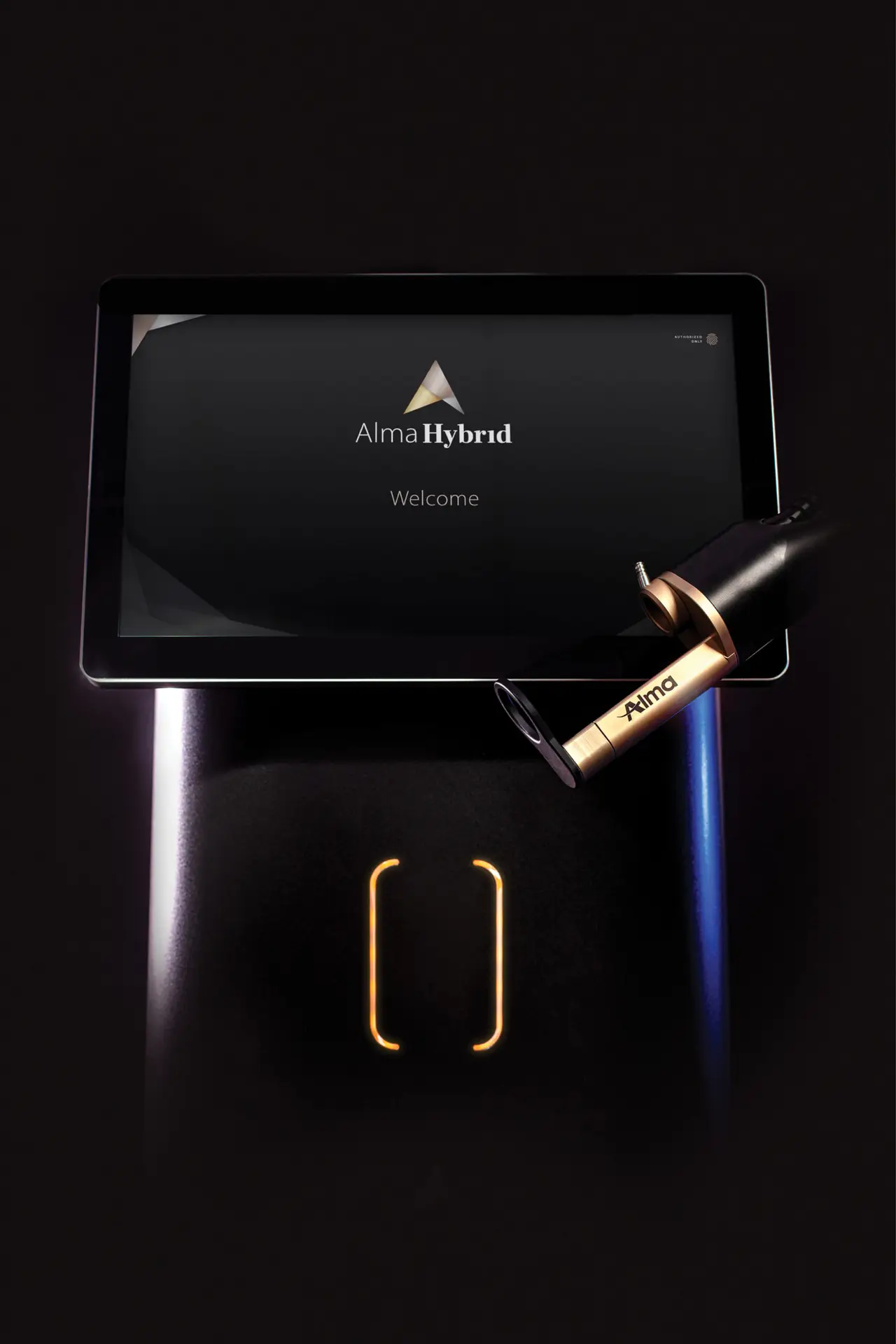
Alma Hybrid combines two fractional laser wavelengths that can be used individually or together.
Your provider determines which technology, combination, and settings may be appropriate.
More intensive treatment does not automatically mean a better option. The treatment plan should balance your concerns, skin characteristics, potential risks, and acceptable recovery time.
Not every type of pigmentation or scar should be treated with laser resurfacing. Some concerns require evaluation by a dermatologist or another qualified medical professional.
Results develop as the treated area heals. No specific degree of improvement can be guaranteed.
Hyaluronic acid used as part of a resurfacing protocol is not automatically the same as an injectable dermal filler. The product and method of use should be clearly explained before treatment.
Platelet-rich plasma, commonly called PRP, is prepared from a sample of your own blood.
The sample is processed to separate a platelet-rich portion of the plasma. When PRP is included with Alma Hybrid Skin Resurfacing, your provider will explain how it will be used as part of the procedure.

Because PRP comes from your own blood, it still requires proper collection, preparation, handling, and application. Bruising or discomfort may occur at the blood-draw site.
PRP does not guarantee faster healing or a particular aesthetic result. Your provider should discuss why it is being considered and what evidence supports its use within the proposed treatment.
Pixel Peel is a lower-parameter CO₂ laser resurfacing treatment performed with Alma Hybrid.
It is intended as a lighter resurfacing option for people who want to address selected surface-level concerns with a treatment plan designed around a shorter recovery period than more intensive resurfacing.
Pixel Peel may be considered for:

“Lighter” does not mean risk-free or appropriate for everyone. A consultation is still required to evaluate your skin and discuss expected recovery.
The appropriate option cannot be selected from this comparison alone. Your provider must evaluate your skin and discuss your treatment priorities.
Your provider explains:

Tell your provider about:
Do not stop prescribed medication unless instructed by the prescribing healthcare professional.
Your treatment may need to be postponed if the area is sunburned, irritated, infected, or otherwise unsuitable.
The appearance and duration of recovery depend on treatment intensity and individual response.
You may experience:
Follow the cleansing, moisturizing, and sun-protection instructions provided by the Lawa team. Do not pick, peel, or scrub healing skin.
Avoid adding unapproved skincare products during recovery. Ask your provider when you can restart active ingredients and return to your usual routine.
Contact the Lawa team if you experience worsening pain, spreading redness, drainage, fever, extensive blistering, delayed healing, or another concerning reaction.


Possible risks of laser resurfacing include:
Appropriate treatment selection and aftercare can help manage risk but cannot eliminate it.
Your resurfacing consultation may include other Lawa aesthetic services when appropriate.

The information on this page is provided for general educational purposes and is not a substitute for professional medical advice, diagnosis, or treatment. Alma Hybrid Skin Resurfacing is not appropriate for every person or skin concern.
Treatment selection, product use, recovery, risks, and results vary. A qualified provider must evaluate your skin and health information before recommending treatment. Seek appropriate medical evaluation for new, changing, bleeding, painful, or otherwise concerning skin findings.